
Regain mobility, improve nerve function, and support natural recovery through a structured Ayurvedic neuro-rehabilitation program designed for paralysis and post-stroke care. The treatment approach focuses on restoring coordination between the brain, nerves, and muscles using time-tested therapies, targeted herbal formulations, and guided rehabilitation techniques.
Patients receive a personalized care plan that combines Panchakarma therapies, medicated oil treatments, internal medicines, physiotherapy support, and lifestyle corrections to help rebuild strength and functional movement. Each protocol is tailored based on the type of paralysis, duration of the condition, age, and overall health status to ensure safe and progressive recovery.
Care programs are designed for individuals dealing with stroke-related paralysis, facial paralysis, limb weakness, nerve damage, and post-hospital rehabilitation needs. The goal is to improve circulation, activate affected nerves, reduce stiffness, enhance muscle response, and gradually help patients regain independence in daily activities.
With consistent treatment and monitoring, many patients experience better mobility, improved balance, reduced discomfort, and enhanced confidence in movement. Early intervention and continuous therapy play a key role in achieving meaningful recovery outcomes.
Conditions Treated
Stroke paralysis (hemiplegia)
Facial paralysis (Bell’s palsy)
Hand & leg weakness
Post-stroke rehabilitation
Nerve damage and mobility issues
Paralysis after injury
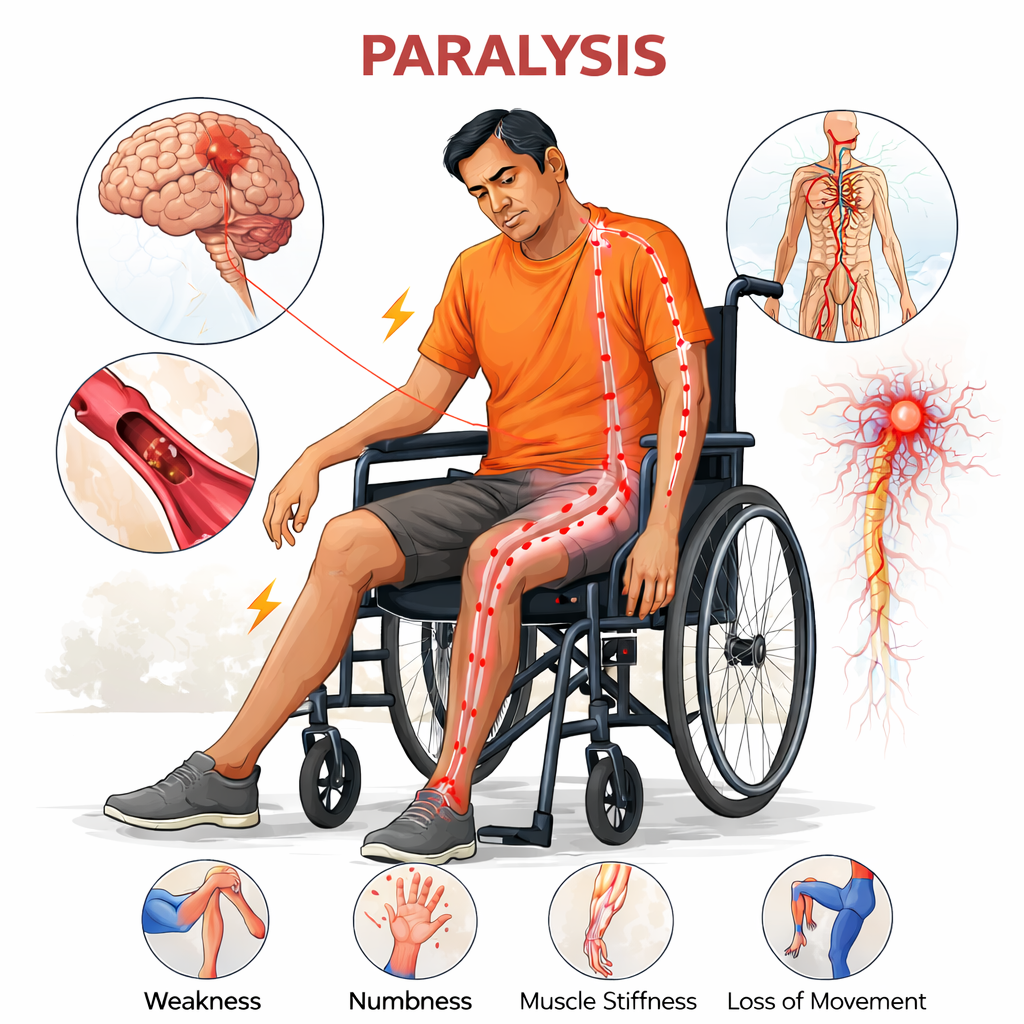
Ayurveda Understanding
In Ayurveda, paralysis is mainly caused by an imbalance of Vata dosha, which controls movement, nerves, and muscle activity. When Vata is disturbed due to factors like stroke, injury, stress, aging, or poor lifestyle, it affects communication between the brain, nerves, and muscles, leading to weakness or loss of movement.
Ayurveda views paralysis as a neurological condition involving blocked nerve pathways, reduced circulation, and tissue weakness. The approach focuses on correcting the root imbalance rather than only managing symptoms.
Treatment aims to strengthen the nervous system, improve blood flow, nourish muscles, and restore coordination through therapies, herbal medicines, and rehabilitation. With consistent care and proper lifestyle support, gradual improvement in mobility and function is possible.
Consultation-Based Care Approach
At BBETTER Ayurveda, knee care begins with:
Understanding lifestyle patterns
Body constitution assessment
Mobility history
Diet and routine evaluation
Pain pattern analysis
Based on findings, suitable care guidance is provided.
Role of Therapies
Traditional Ayurvedic therapies may be recommended to support:
Joint comfort
Flexibility
Circulation around joints
Muscle relaxation
Therapies are suggested only after consultation.
Role of Ayurvedic Medicines
Where required, classical Ayurvedic formulations may be advised to:
Support joint nourishment
Maintain movement comfort
Help balance internal body factors
All recommendations are individualized.
Why Choose This Treatment in Hyderabad?
Specialized Ayurvedic neuro-rehabilitation approach
Experienced practitioners in paralysis care
Combination of Panchakarma + physiotherapy
Customized treatment plans for every patient
Natural, non-invasive therapies
Support for long-term recovery
Expected Improvements
With consistent therapy, patients may experience:
Reduced stiffness and pain
Improved limb movement
Better balance and coordination
Strengthened nerves and muscles
Gradual return to daily activities
Recovery depends on condition severity, age, and early treatment.
Who Should Start Treatment Immediately?
Recent stroke patients
Facial paralysis cases
Difficulty walking or moving limbs
Sudden nerve weakness
Post-hospital rehabilitation needs
Early intervention improves recovery outcomes.
Patient Support
Step-by-step treatment planning
Regular progress monitoring
Diet and lifestyle guidance
Family counselling for home care
Testimonial
Customer Feedback & Reviews
Start with a personalized Ayurveda consultation to understand suitable care options for knee discomfort.